
Drew County Marriage Records Lookup
Drew County marriage records are held by the County Clerk in Monticello, with documents on file going back to the county's founding in 1846. If you need a marriage license, a certified copy for legal use, or access to older records for genealogy, the clerk's office at 210 S. Main Street is the place to start.
Drew County Marriage Records
Drew County Clerk Office Information
The Drew County Clerk's office is located at 210 S. Main Street, Monticello, AR 71655. The phone number is (870) 460-6170, and the office is open Monday through Friday from 8:00 AM to 4:30 PM. Call ahead to confirm current fees for marriage licenses and certified copies before you visit. The office is in the courthouse in downtown Monticello, close to the University of Arkansas at Monticello campus.
To get a marriage license in Drew County, both applicants must go to the clerk's office at the same time. Each person needs a valid photo ID. A driver's license, state ID, or passport is fine. The clerk reviews the documents, collects the fee, and issues the license. Arkansas law requires a 72-hour waiting period from the time of issuance before the ceremony can happen. The license is valid for 60 days. If you do not use it within 60 days, you must apply again. No blood test is required in Arkansas.
Arkansas has not recognized common law marriage since 1941. Two people cannot become legally married simply by living together or by presenting themselves as married. A license and a ceremony are required. This applies to everyone in Drew County, regardless of how long they have been together.
Note: Both applicants must be present at the Drew County Clerk's office in person; proxy applications are not permitted under Arkansas state law.
Requesting Drew County Marriage Record Copies
Certified copies of Drew County marriage records are available from the clerk's office. For an in-person request, bring the full names of both parties and the approximate date of marriage. Staff can usually find and produce a certified copy while you wait. The copy will carry the county seal and be signed by the clerk, making it acceptable for legal purposes such as name changes, insurance claims, and government benefit applications.
If you cannot visit in person, mail requests are an option. Write a letter with the names of both parties, the marriage date, your address, and a check or money order payable to the Drew County Clerk. Add a self-addressed stamped envelope. Mail requests typically take one to two weeks, sometimes longer. If staff cannot find the record, they will reach out to you before processing payment.
The Arkansas Department of Health holds a statewide coupon index of marriages going back to 1917. This index can confirm that a marriage happened and help you identify the correct county if you are unsure. For the full certified copy, however, you must go to the Drew County Clerk or use the VitalChek service for an online order.
Genealogy and Historical Records in Drew County
Drew County was formed in 1846 from Bradley and Ashley counties and named for Thomas Drew, the third Governor of Arkansas. The records from the late 1840s through the Civil War era are particularly valuable for researchers tracing southeast Arkansas families. Some records from the earliest years are fragile or incomplete, but most have been preserved at the courthouse.
For research help, the Arkansas State Archives in Little Rock holds microfilm of Drew County marriage records. The archives are especially useful for pre-1917 records that are not in the state Department of Health index. FamilySearch has indexed many of the older Drew County records and provides free online access. The Encyclopedia of Arkansas has a county profile that helps researchers understand the settlement patterns and key families of the area.
The University of Arkansas at Monticello, established in 1910, has also contributed to local record-keeping and community documentation over the decades. The university library may have local history collections that supplement the official marriage records held by the county.
Note: The Arkansas State Archives may hold early Drew County marriage records on microfilm that complement or supplement what is available at the courthouse.
Arkansas Marriage Requirements and State Law
State law under Arkansas Code Title 9 applies to every county, including Drew. You must be 18 to marry without anyone's permission. At 17, you can get a license if a parent or guardian comes with you to the clerk's office and signs the consent form in person. No one under 17 may marry in Arkansas under any circumstances.
The 72-hour waiting period is mandatory under state law. It starts when the clerk issues the license and ends exactly 72 hours later. Only a circuit court judge can waive this period, and such waivers are rare. After the ceremony, the officiant must return the signed license to the clerk within 60 days. If the officiant fails to do so, the marriage may still be valid, but there could be complications when you need certified records later. The clerk files the returned license and sends a coupon to the Arkansas Department of Health for the statewide vital records index under Title 20.
University of Arkansas at Monticello Reference
The image below comes from the University of Arkansas at Monticello website, which reflects the educational character of Drew County's county seat.
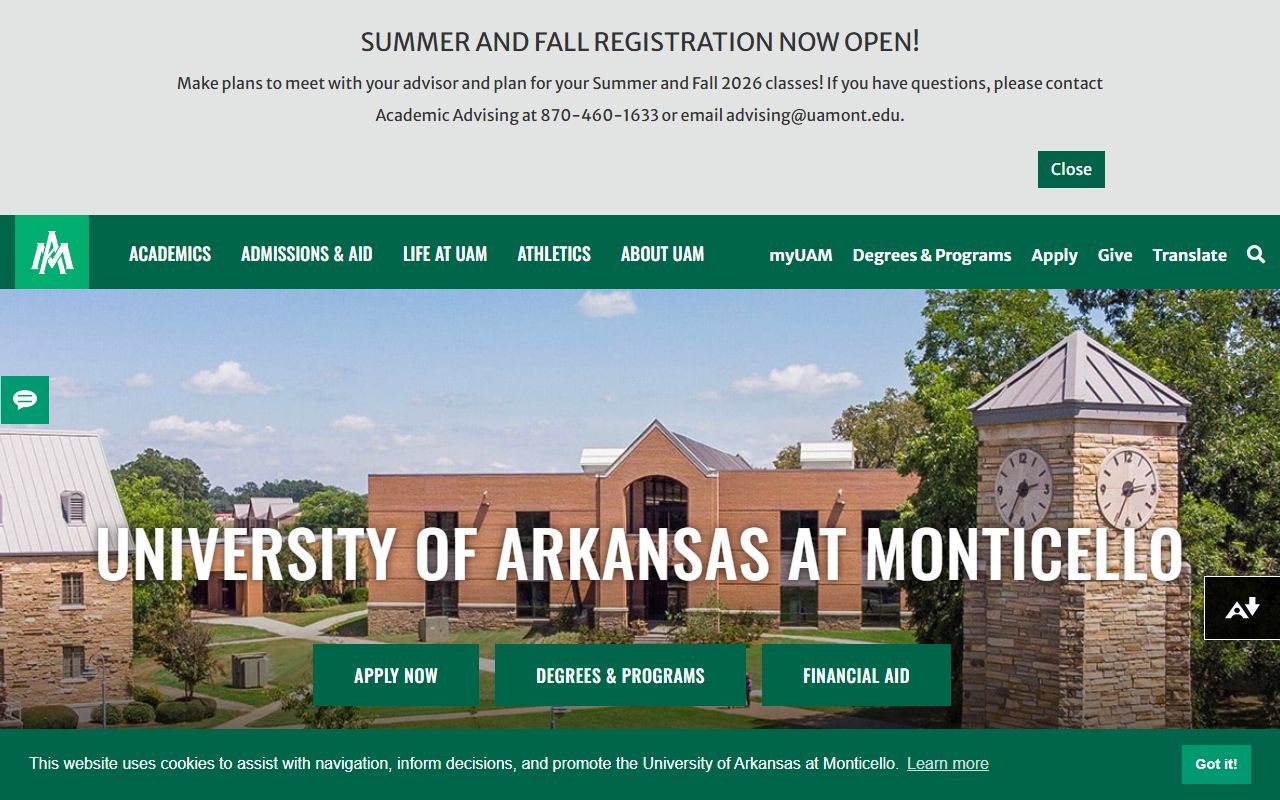
The university's presence in Monticello means the county clerk regularly serves students, faculty, and staff who are applying for marriage licenses. If you are affiliated with the university and need records, the clerk's office on Main Street is just a short drive from campus. The university library may also have local historical collections that help with genealogy research involving Drew County families.
State and National Resources for Arkansas Records
The CDC's Where to Write page for Arkansas outlines how to request marriage records from the state Department of Health and what fees apply. The page also links to the VitalChek portal for online ordering. The Arkansas State Archives handles older records and genealogical inquiries. For the current text of state marriage law, visit the Arkansas Legislature website and search for Title 9 and Title 20.
These resources cover both modern records and historical research. Knowing which agency holds what can save you time. For anything in Drew County, start with the county clerk. For statewide questions or records from multiple counties, the Department of Health and the State Archives are your best bets.
Note: For legal name change purposes, only a certified copy from the Drew County Clerk or through VitalChek carries the required official seal and signature.